Guides · Buying a printer
Best 3D printer for beginners UK: what actually makes a printer easy
The features that make a first 3D printer easy to live with, and the beginner-friendly models on UK stores on 15 November 2026, from the Bambu Lab A1 mini to the Prusa MK4S.
We haven't tested these products. This comparison is based on makers' published specifications and manuals, retailer listings and owner reviews (checked 15 November 2026).
A beginner's printer is not just a cheap printer. It is one that sets itself up, gets the first layer right without fuss, and has good help when something goes wrong. This guide explains which features make the difference, then names the models on UK stores that have them, using the makers' own specifications as checked on 15 November 2026.
Five features that matter most for a first printer
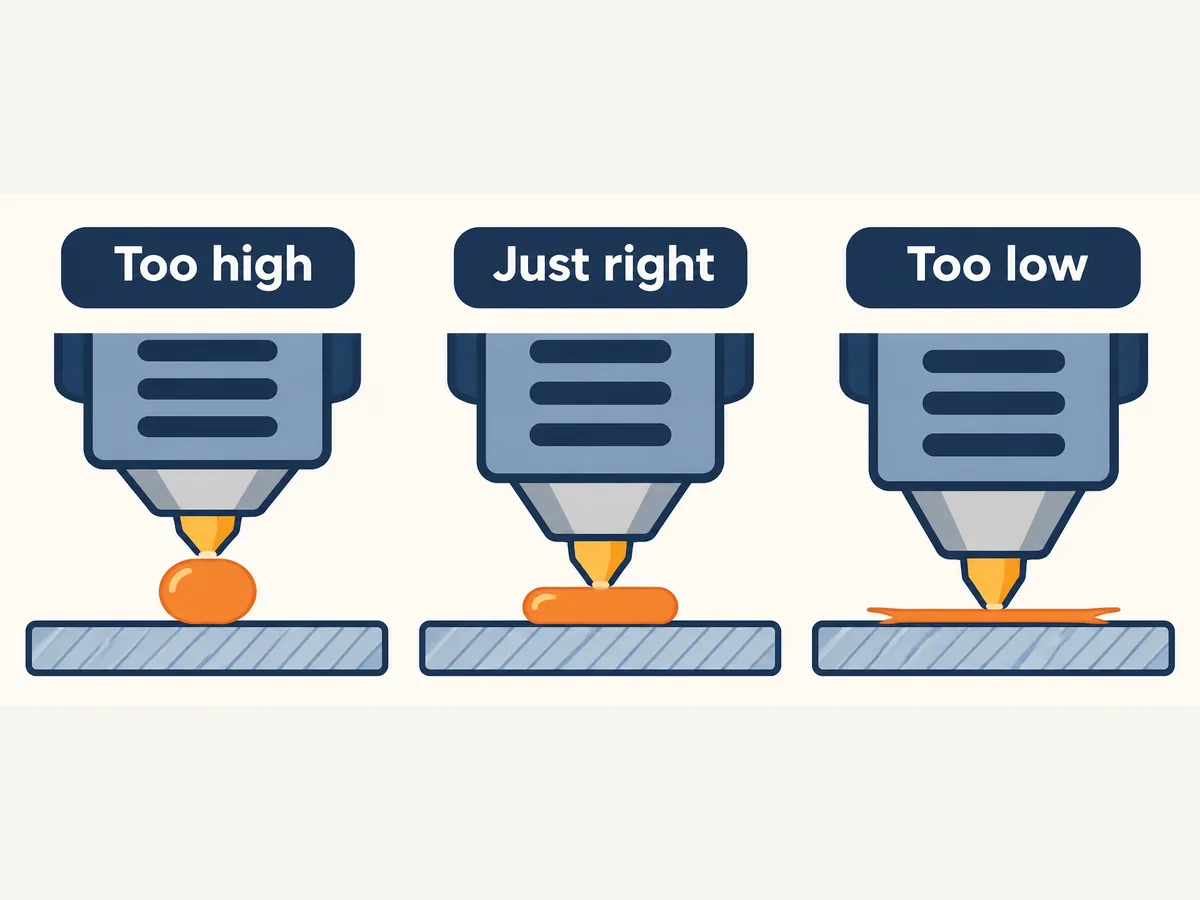
- Automatic bed levelling and first-layer calibration. Most failed first prints are first-layer problems. Bambu Lab lists "full-auto calibration" on the A1 mini and A1. Prusa's MK4S uses a loadcell sensor in the nozzle for automatic mesh bed levelling. Elegoo lists 121-point auto-levelling on the Centauri Carbon 2.
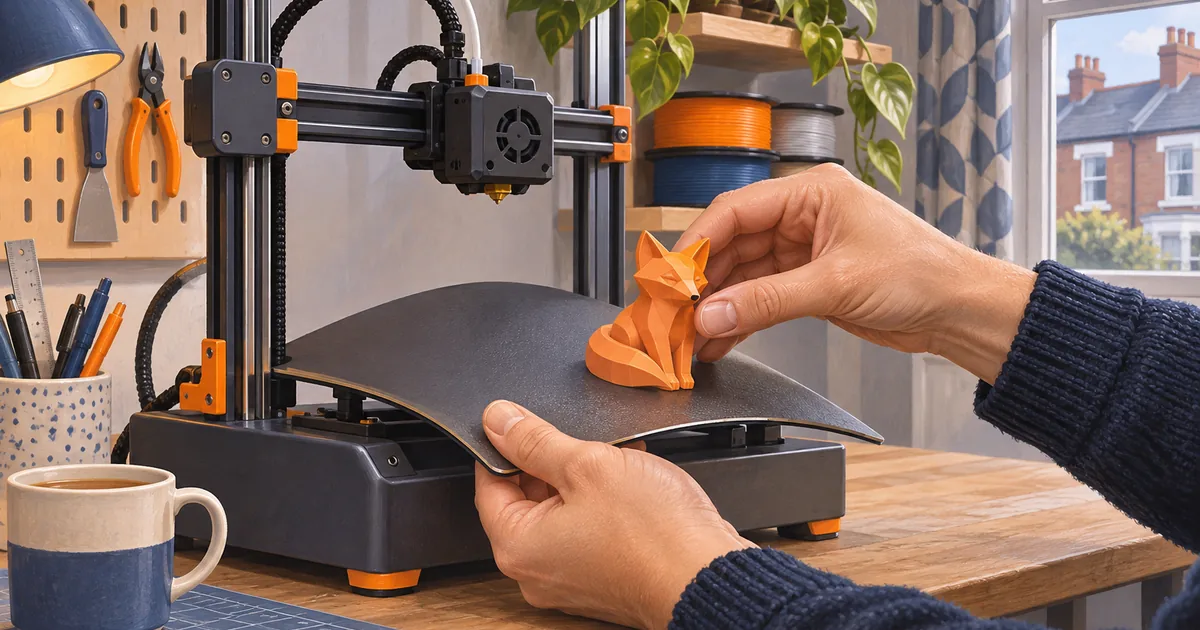
- A removable, flexible build plate. A spring steel sheet with a PEI surface lets you bend the plate and pop the print off. All the models below list one.
- A filament run-out sensor and power-loss recovery. These save long prints. Bambu lists both on the A1 mini.
- Good software with ready-made profiles. You need a slicer that already knows your printer. See slicers and where to find models.
- UK support you can reach. A UK warehouse, a clear warranty and spares on sale matter more than a top speed figure. See buying a 3D printer in the UK.
Speed figures (500 mm/s, 600 mm/s) are maximums for the print head, not the speed a typical part prints at. Do not choose a first printer on speed alone.
Shortlist for beginners
Bambu Lab A1 mini: smallest and simplest
Around £139 on the Bambu Lab UK printers page (checked 15 November 2026; sale prices change). Bambu's own buying advice on that page calls the A1 mini "the easiest starting point". Specifications on the A1 mini page: 180 × 180 × 180 mm build volume, 300 °C hot end, 80 °C bed, filament run-out sensor, filament tangle sensor, power-loss recovery and a low frame-rate camera. Bambu quotes under 48 dB in silent mode, which matters if it will live in a living room.
Limits: the small bed, and Bambu says ABS, ASA, PC and nylon are not recommended. For a beginner printing PLA and PETG that is rarely a problem.
Bambu Lab A1: the same idea, bigger
Around £189 on the printers page (checked 15 November 2026; sale prices change). The A1 has a 256 × 256 × 256 mm build volume and a 100 °C bed, with the same calibration and sensors. It is a good choice if you already know you want to print larger items such as storage boxes or cosplay parts in sections.
Creality Ender-3 V3 SE: lowest price on a UK store
Around £149 on the Creality UK store (checked 15 November 2026; sale prices change), shipped from a UK warehouse with a 14-day return window and up to 12 months' warranty. The Ender family has a huge community, which helps when you search for fixes. The UK store page we opened did not show a full specification table, so check the details before you buy.
Prusa MK4S: for people who want to learn the machine
Prusa's MK4S page lists 250 × 210 × 220 mm, automatic first-layer calibration, a filament sensor, power panic (power-loss recovery) and magnetic PEI spring steel sheets. It is sold as a kit or assembled, and the assembled price we saw was around $999 in US dollars (checked 15 November 2026; sale prices change). Prusa's slicer is free, open source and needs no account. The trade-off for a UK buyer is warranty: Prusa's warranty page gives two years to consumers in the EU and a few other countries, but one year for "the rest of the world", which includes the UK.
Elegoo Centauri Carbon 2: an enclosed option at a beginner price
Around £259 on pre-order on the Elegoo UK store (checked 15 November 2026; sale prices change). It is enclosed, CoreXY and has a built-in camera and air filter. If you plan to try ABS or ASA later, an enclosed first printer avoids buying twice. Check delivery dates, as it was a pre-order on the day we looked.
Multi-colour: nice, but not essential
Multi-colour units such as Bambu's AMS lite (around £139 on its own, checked 15 November 2026; sale prices change, and only for A1 and A2 series printers) are fun, but they add purge waste and something else to learn. Many beginners are happier starting with one colour and adding a unit later. Read multi-colour 3D printing explained first.
Where to put a first printer
A spare-room desk is better than a bedroom. Desktop printers give off ultrafine particles and some vapours. The University of Edinburgh's 3D printer guidance, based on HSE research, advises using PLA wherever possible to reduce fumes and particles, and ventilating the space. It is sensible not to sleep in the same room as a running printer. See 3D printer safety.
Our beginner advice in one paragraph
Pick a printer with automatic calibration and a PEI plate, start with PLA, print a few small models from a well-known library, and only then worry about speed, multi-colour or exotic materials. Our first print checklist walks you through day one.
Is a cheap second-hand printer a good first buy?
It can be, but you lose the UK warranty and returns that come with a new printer, and older models may lack auto-levelling. If you are new, a current model from a UK store is usually less frustrating.
Do I need to assemble a beginner printer?
Most printers in this guide arrive largely assembled. Prusa sells the MK4S as a kit or assembled. A kit means building the printer yourself from Prusa's manual, so compare both options on Prusa's page and be honest about how much time you have.
Sources
Opened and checked on 15 November 2026.
- uk.store.bambulab.com/products/a1-mini
- uk.store.bambulab.com/products/a1
- uk.store.bambulab.com/collections/3d-printers
- uk.store.bambulab.com/products/ams-lite
- www.prusa3d.com/product/original-prusa-mk4s-3d-printer-5/
- www.prusa3d.com/p/prusaslicer/
- help.prusa3d.com/article/warranty_2288
- store.creality.com/uk/products/ender-3-v3-se-3d-printer
- uk.elegoo.com/products/centauri-carbon-2
- health-safety.ed.ac.uk/guidance/hazardous-substances/3d-printers